Programmed Graphism
Research writing at the intersection of computation and graphic design.
(Editorial)
(Research)
(Creative Coding)
(2022)
Programmed Graphism
Research writing at the intersection of computation and graphic design.
(Editorial)
(Research)
(Creative Coding)
(2022)
(Information)
Programmed Graphism is a research led master’s thesis on how computation and graphic design converge.
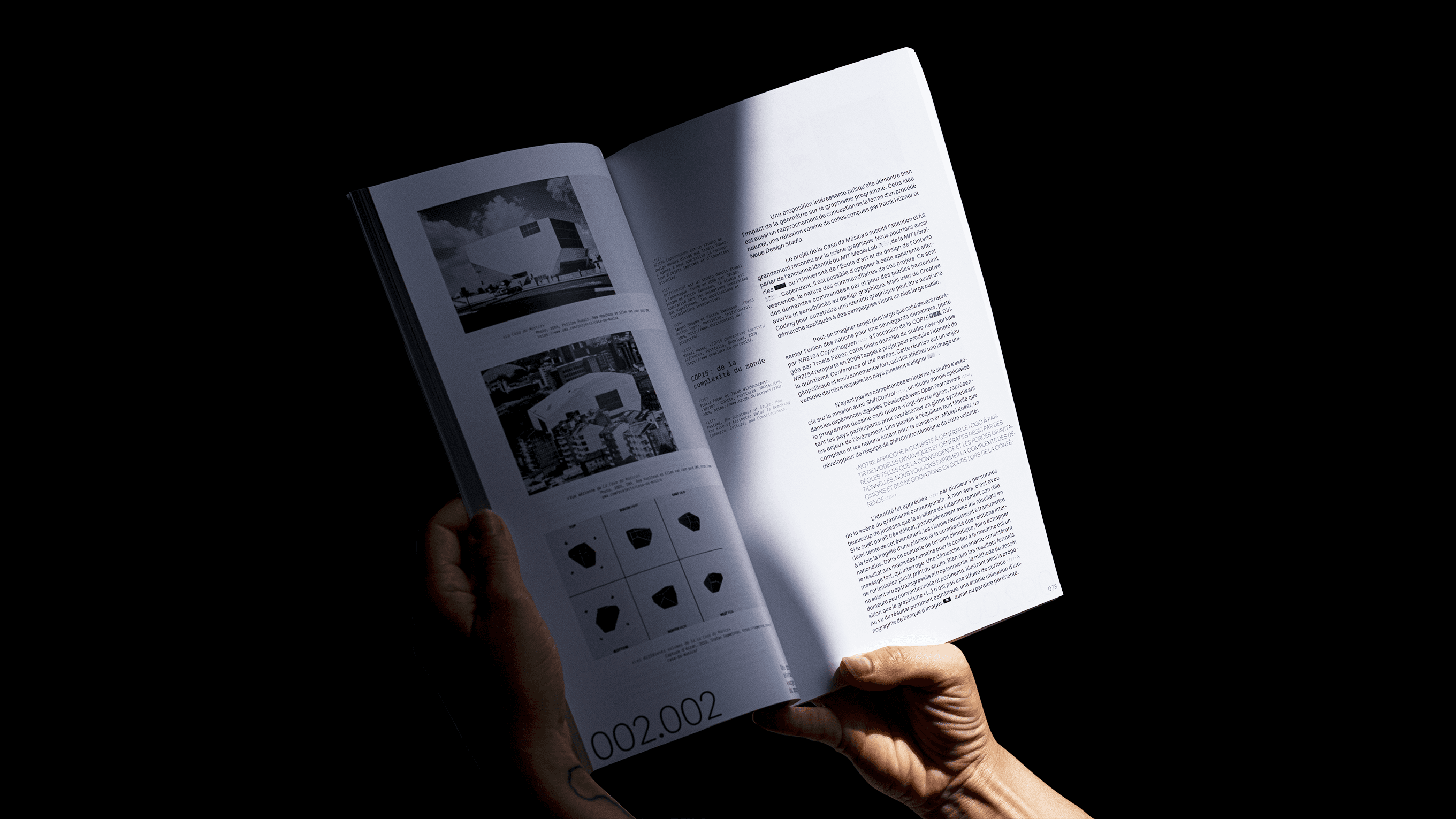
The thesis traces computational logic long before computers: grids, proportional systems, rule sets. Case studies, including Stefan Sagmeister’s Casa da Música identity, show how bespoke software can replace off the shelf tools and restore creative control. A final section looks ahead to micro utilities and early AI (writing begun in 2021) as practical tools for designers and their communities.
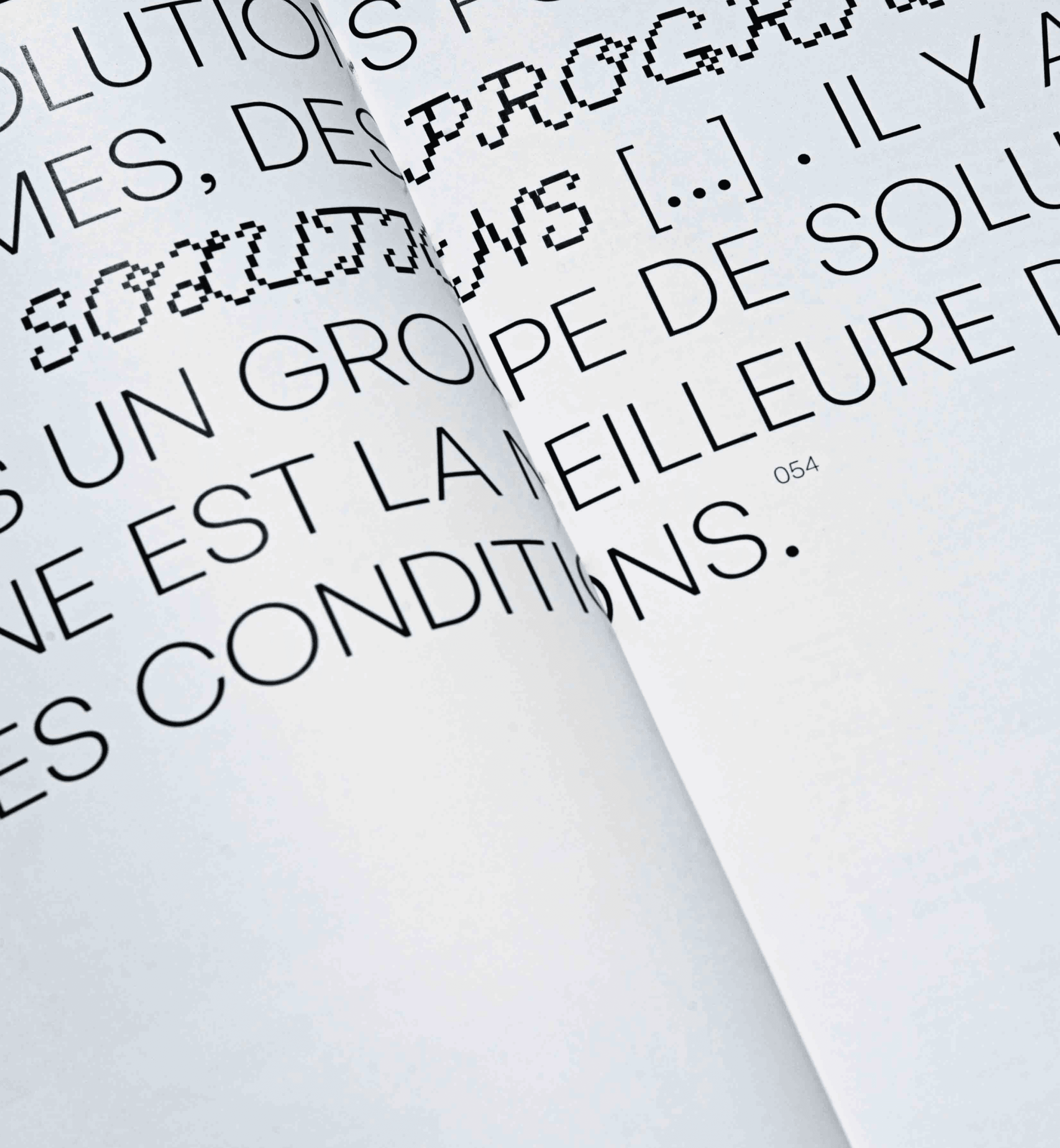
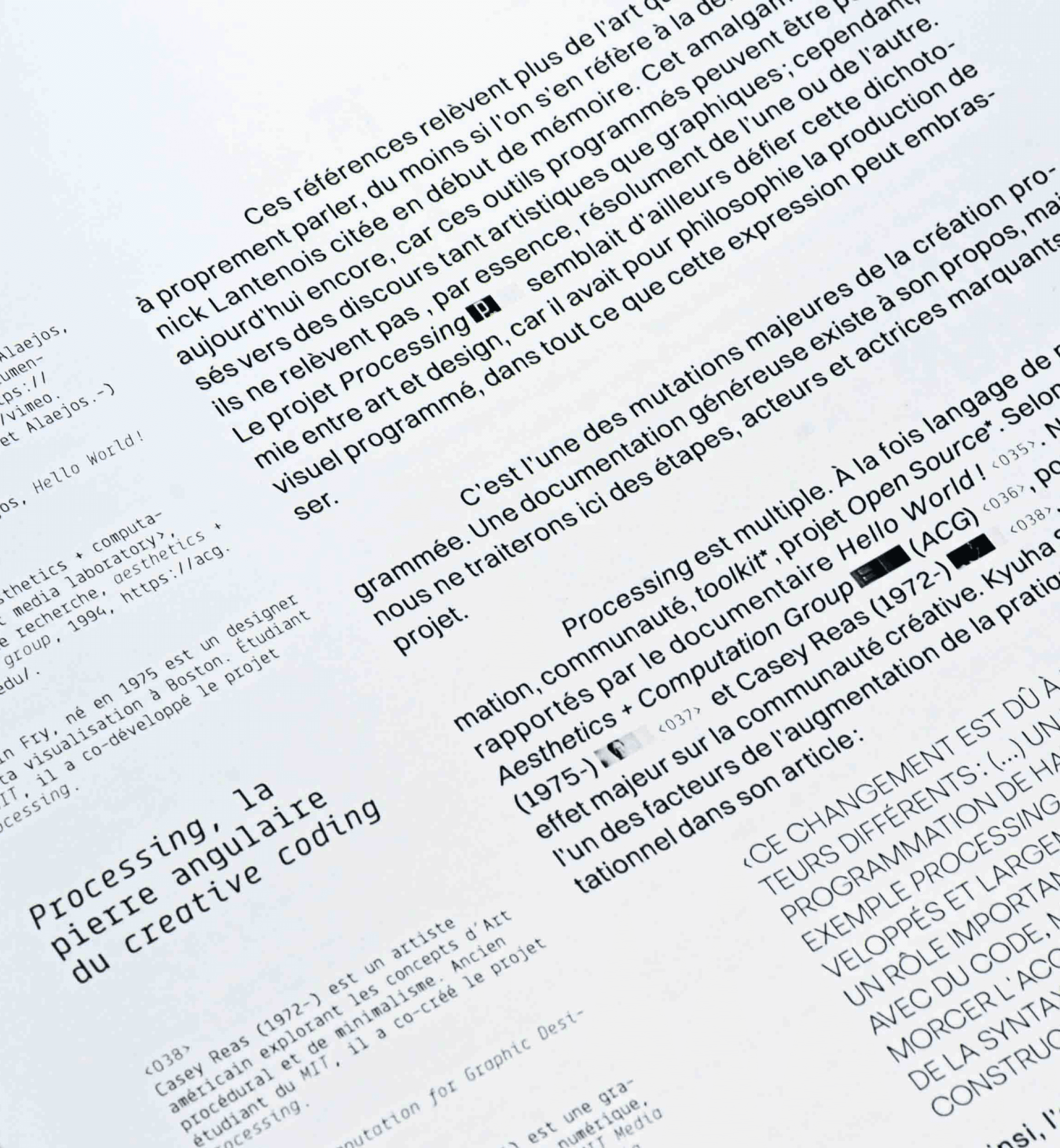
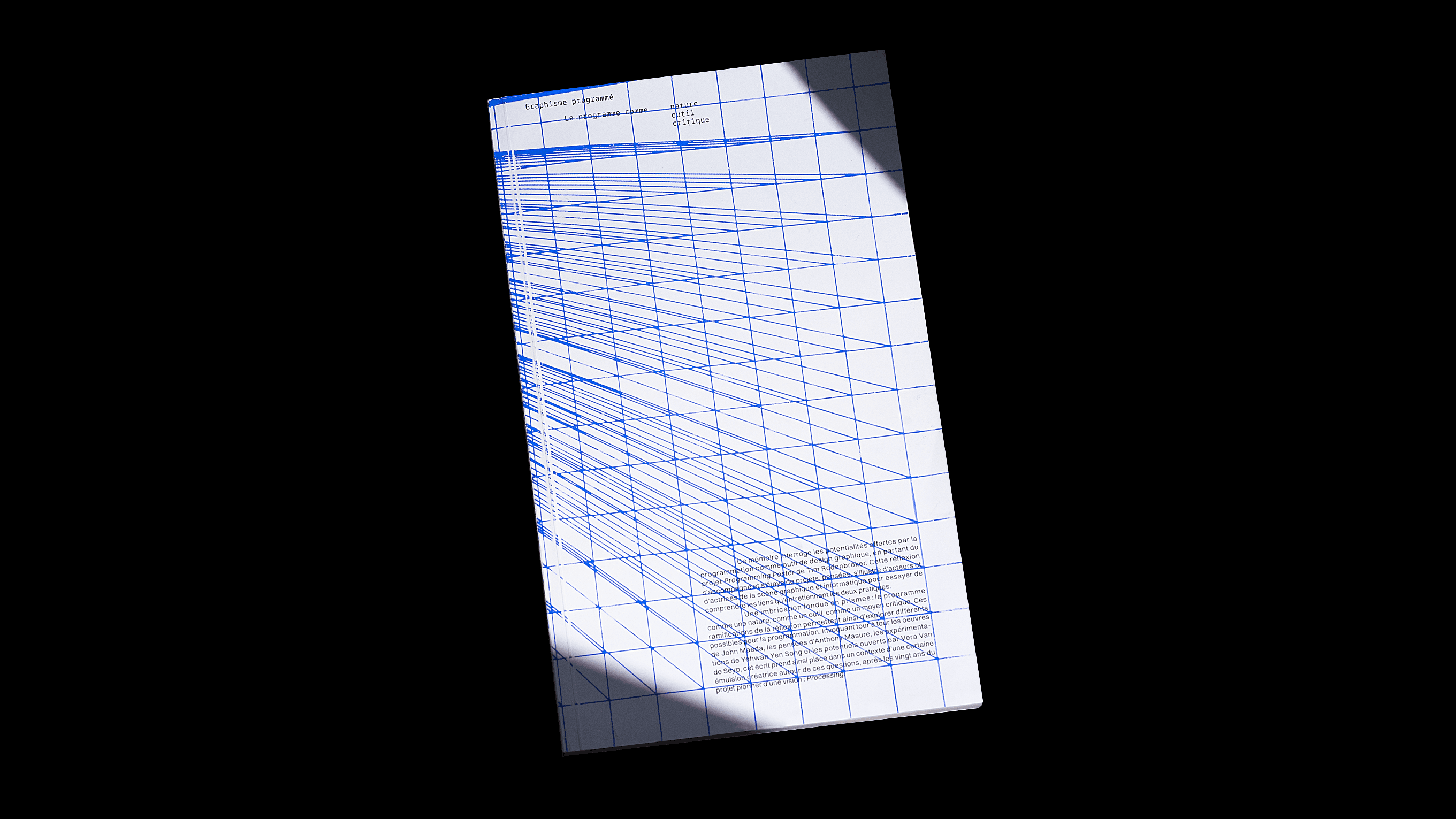
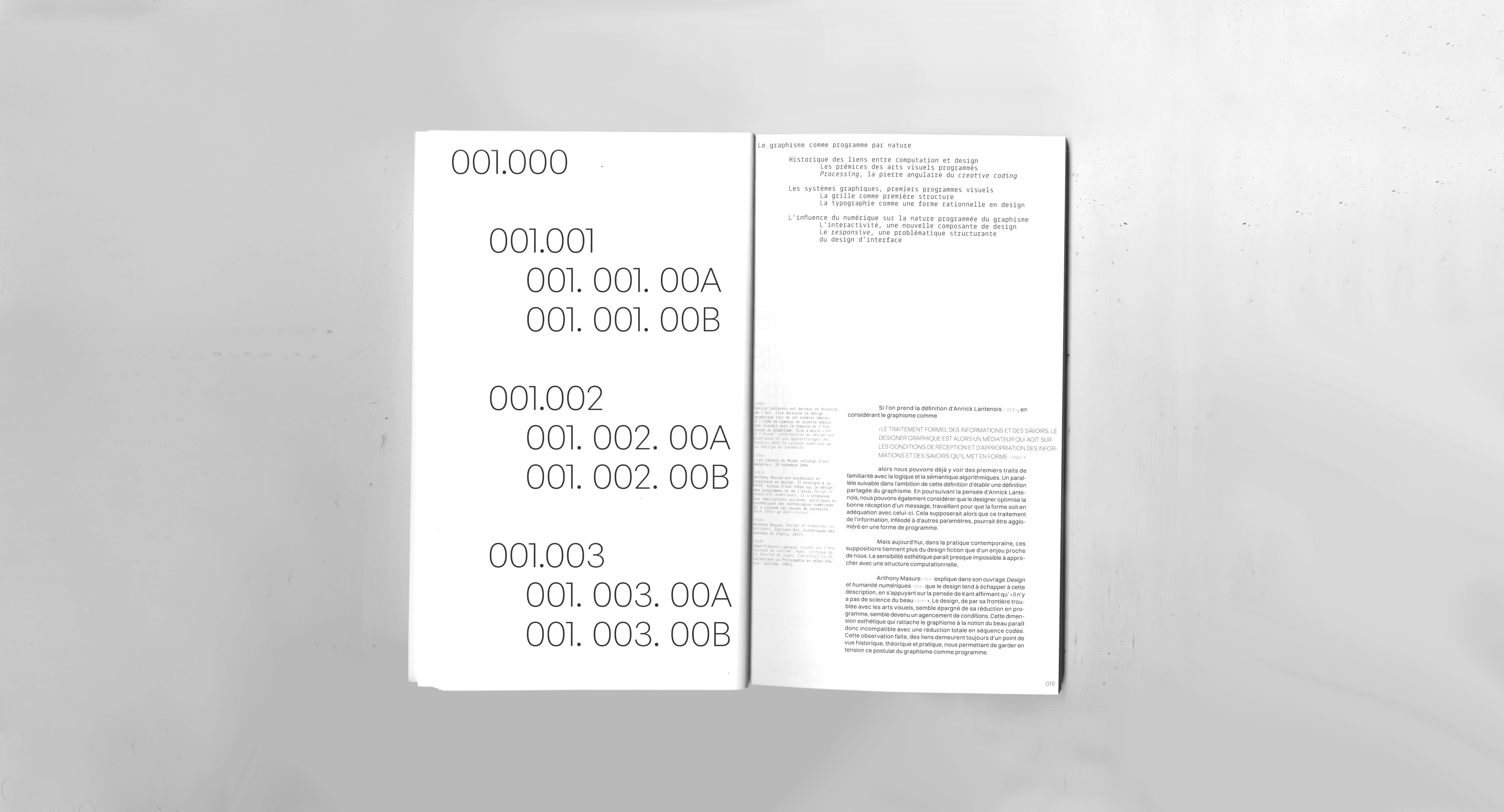
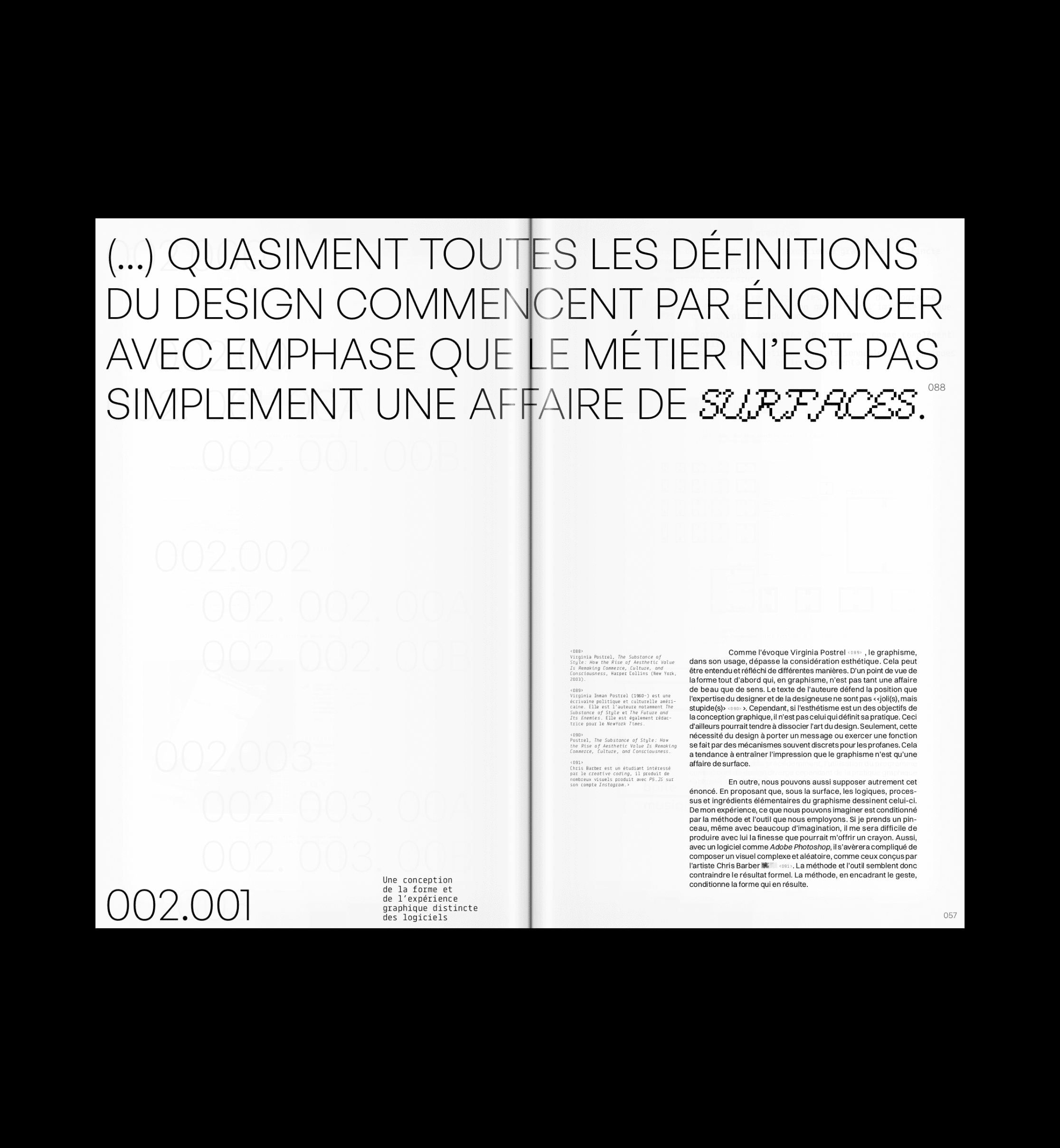
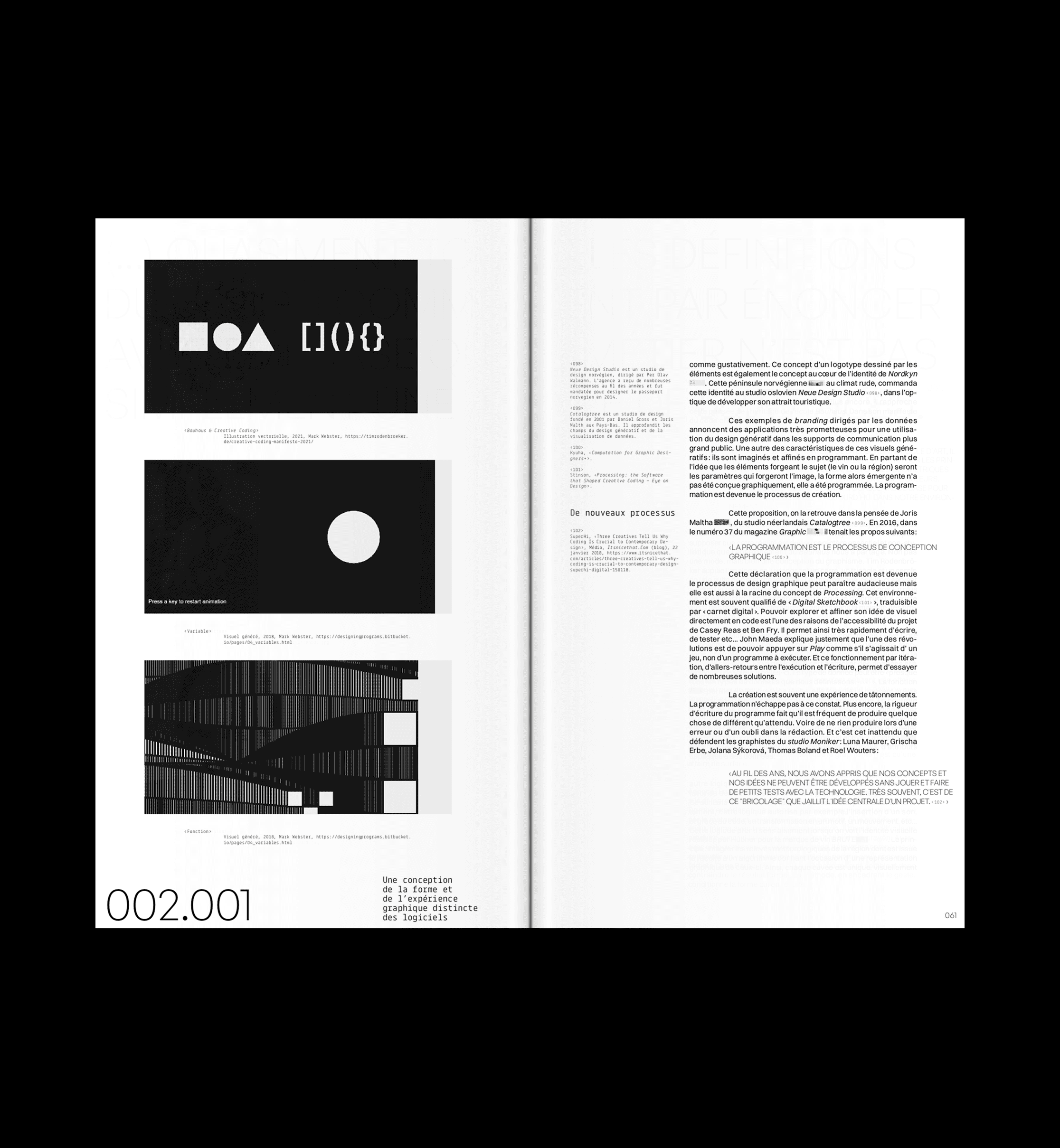
The book uses a systematic page layout with symmetrical spreads, code style indentations, monospaced footnotes, and Processing generated images set to a single raster ratio. A hybrid display typeface pairs pixel edges with hand drawn curves, and both the cover and the exhibition piece are rendered in Processing. The result is a tangible case for algorithmic thinking in graphic design, past, present, and next.
(Gratitude)
Auriane Preud'homme
(Information)
Programmed Graphism is a research led master’s thesis on how computation and graphic design converge.
The thesis traces computational logic long before computers: grids, proportional systems, rule sets. Case studies, including Stefan Sagmeister’s Casa da Música identity, show how bespoke software can replace off the shelf tools and restore creative control. A final section looks ahead to micro utilities and early AI (writing begun in 2021) as practical tools for designers and their communities.
The book uses a systematic page layout with symmetrical spreads, code style indentations, monospaced footnotes, and Processing generated images set to a single raster ratio. A hybrid display typeface pairs pixel edges with hand drawn curves, and both the cover and the exhibition piece are rendered in Processing. The result is a tangible case for algorithmic thinking in graphic design, past, present, and next.
(Gratitude)
Auriane Preud'homme
(Information)
Programmed Graphism is a research led master’s thesis on how computation and graphic design converge.
The thesis traces computational logic long before computers: grids, proportional systems, rule sets. Case studies, including Stefan Sagmeister’s Casa da Música identity, show how bespoke software can replace off the shelf tools and restore creative control. A final section looks ahead to micro utilities and early AI (writing begun in 2021) as practical tools for designers and their communities.
The book uses a systematic page layout with symmetrical spreads, code style indentations, monospaced footnotes, and Processing generated images set to a single raster ratio. A hybrid display typeface pairs pixel edges with hand drawn curves, and both the cover and the exhibition piece are rendered in Processing. The result is a tangible case for algorithmic thinking in graphic design, past, present, and next.
(Gratitude)
Auriane Preud'homme